23 October 2026
Spring at Estancia Cerro Guido: The Awakening of New Life
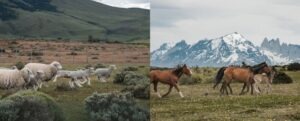
A lamb follows closely behind its mother. A foal ventures out to run for the first time. Among the steppe bushes, tiny shoots and flowers begin to change the colors of the landscape. Spring arrives at Estancia Cerro Guido with scenes that invite you to pause and watch as life renews itself in this corner of Chilean Patagonia.
As the days grow longer, new life, blooming flowers, and work in the vegetable garden set the pace of the season. For our visitors, this is an opportunity to experience the estancia during a special time in its annual cycle, when country life and nature offer new details to discover.
New Members in the Estancia Life
The arrival of lambs, foals, and calves is one of the most eagerly anticipated events of spring. In the fields, the young stay close to their mothers, rest among the grasses, and, little by little, begin to explore their surroundings.
These scenes also offer a glimpse into the day-to-day work on a cattle ranch. The calving season requires attention and care from those who know the animals and follow their cycles year after year. Observing these tasks provides insight into a craft that continues to shape the identity of Estancia Cerro Guido.
During your visit, coming across a sheep and its lamb or seeing foals alongside the herd offers a close-up look at country life. These are simple moments that connect visitors with the region and the people who live there.
Chulengos: A New Generation on the Steppe
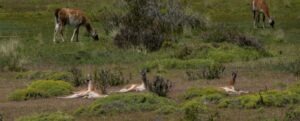
This renewal also extends to wildlife. As the season progresses, guanaco herds begin to welcome new members: the chulengos, as their young are known.
Their small, long-legged figures, still moving somewhat awkwardly, catch the attention among adults. Watching them follow their mothers and explore their surroundings allows us to appreciate another dimension of Patagonian wildlife, linked to its cycles of reproduction and growth.
Each encounter invites visitors to observe calmly and maintain a safe distance, allowing the animals to go about their business undisturbed. Accompanied by guides, visitors can learn to recognize behaviors and details that enrich their understanding of the landscape.
You can also discover spring by looking at the ground
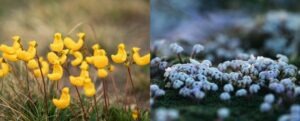
In a land of vast horizons, it’s easy for the mountains to capture everyone’s attention. However, during the spring, some of the changes take place right at our feet.
Shoots and flowers emerge among the grasses and shrubs, adding variety to a vegetation adapted to the wind and conditions of Patagonia. At Estancia Cerro Guido, species such as the guanaco bush, black bush, calafate, lady´s slipper, and sand lady´s slipper invite visitors to explore the diversity of the local flora.
Flowering progresses at its own pace, depending on the species, the area, and the conditions of each season. That’s why the same walk can reveal different details as the weeks go by: a flower that has just bloomed, new leaves, or a shrub that’s beginning to burst with color.
Walking while paying attention to these small changes allows you to discover a landscape that reveals itself on different scales, from the mountain peaks to the plants growing along the trail.
A New Cycle in the Organic Garden
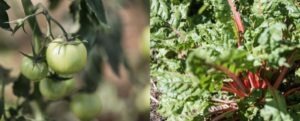
At our hotel, the organic garden is also beginning to come to life. Spring brings a new season of work and growth, during which caring for the land goes hand in hand with the development of the crops.
This space keeps a close connection with the kitchen at Estancia Cerro Guido and offers the chance to learn about the origins of some of the ingredients that make their way to the table. Behind every harvest lies time, dedication, and a constant learning process about what it means to farm in these latitudes.
The awakening of the vegetable garden brings yet another sign of the season: while the fields welcome their new offspring and the wildflowers begin to bloom, here preparations are underway for what will grow over the coming months.
Experience Spring at Estancia Cerro Guido
Visiting Estancia Cerro Guido in the spring allows you to experience a landscape in the midst of transformation. A hike, a horseback ride, or a tour of the estancia can lead to encounters with its new inhabitants and the discovery of the colors that are beginning to appear in the landscape.
It is also an invitation to experience the rhythm of a place where livestock, wildlife, crops, and hospitality coexist on a daily basis. Stopping to watch a chulengo with its mother, identifying a native flower, or visiting the vegetable garden are different ways to understand that relationship.
We invite you to discover spring at Estancia Cerro Guido and to observe up close the small moments that bring this season to life in Patagonia.